The Quiet Side: Planning an Album Session Around Its Natural Pause
Treat the gap between record sides as part of the album’s shape: prepare for it, turn the disc deliberately, and let the music resume without fuss.
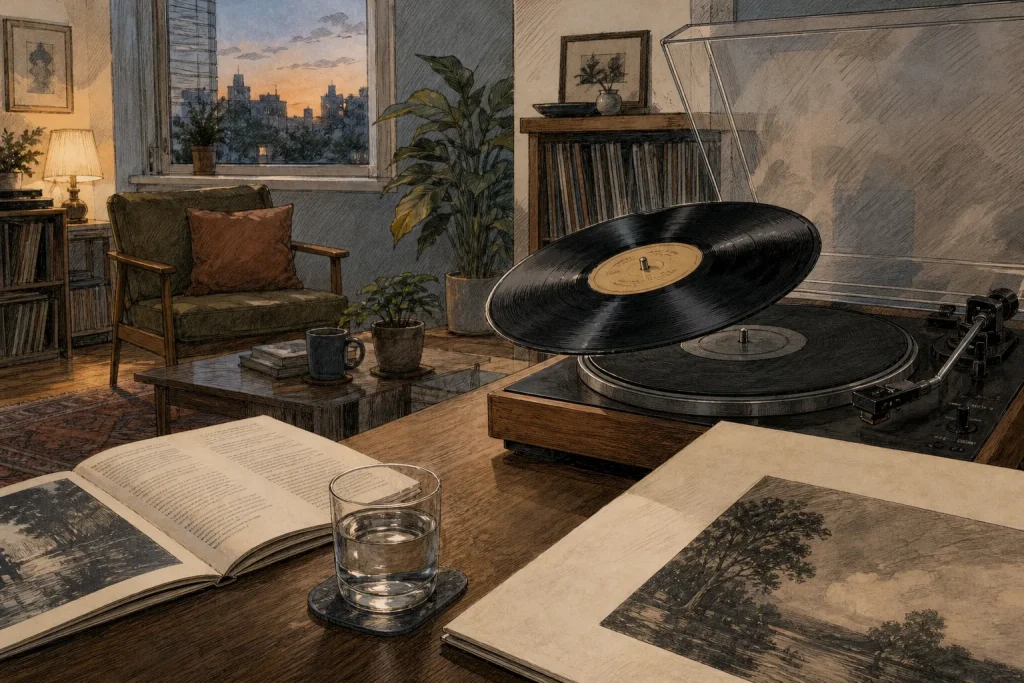
A two-sided album is one listening session with a built-in pause, not two unrelated appointments. If you decide what the break is for before the first track starts, turning the record can feel like part of the music’s pacing rather than a small domestic emergency.
What makes the side break part of the session?
The break gives you a moment to leave the sequence alone. The first side ends where it ends; the second begins when you turn the disc. That physical interval can sharpen the sense of an album’s shape, especially when its mood or arrangement changes across the sides.
There is no need to assign the pause a grand purpose. It may simply be time to stand, stretch, refill a glass of water or let a strong ending settle. The useful distinction is that you are choosing a short interruption, rather than drifting away and returning to the record whenever you happen to remember it.
Should you plan anything before the needle drops?
Prepare for the few ordinary things likely to pull you away. Put the record sleeve somewhere safe, decide where the disc will rest while you turn it, and keep any drink clear of the turntable. If you listen in the evening, silence notifications or leave your phone in another room; the side break is a poor time to discover that a message has become a second programme.
You can also choose what you want the pause to allow. If you would like to sit quietly, arrange the room so you do not need to hunt for a light switch or move a pile of post. If you expect to make tea, accept that the kettle will be part of the interval. The record does not require a ceremony, only a little foresight.
How long should the pause last?
Long enough to do what you intended, and not so long that the session loses its thread. There is no standard duration: a pause for a stretch is different from one that includes putting the kettle on. If you know a task may expand into tidying the kitchen, choose whether you want that task in the session before you begin.
It can help to treat the first side’s final track as a natural cue. Let it finish, then decide whether you need a brief reset or a longer break. You are not obliged to rush because the platter has stopped, nor to wait in silence as though an examiner is about to return.
What should you do while the record is stopped?
Keep the pause proportionate to the album. Stretch, open a window, or sit with the last track’s ending still in mind. If you want to read the sleeve notes, this is a sensible moment; just keep the jacket away from food and drink, and avoid laying the record on an unsuitable surface.
Imagine you have put on an album after dinner and the first side ends while you are seated with a glass on the table. You set the glass aside, stand for a stretch, and leave the sleeve on a clean, dry shelf. The observable result is simple: you return to the turntable without searching for the jacket or wiping up a spill, and the second side begins without an avoidable detour.
Try not to fill every gap with another piece of audio. A radio, a short video or a second record may make the pause feel busy, but it can also blur the boundary you meant to notice. Silence is a perfectly adequate intermission, though it has yet to demand a fee.
How do you turn the record without breaking the mood?
When you are ready, lift the stylus with the tonearm cueing lever, if your turntable has one, and wait for the platter to stop. Handle the record by its edges and labelled centre area, then turn it over and place it on the platter. Lower the stylus only when you are ready for the next side.
Use the procedure suited to your turntable rather than forcing a control that resists. Some decks require you to stop the platter manually; others manage that part for you. Keep fingers away from the playing surfaces, and return the disc to its sleeve when the session is over rather than leaving it exposed to dust.
The goal is not theatrical slowness. A calm, familiar movement is enough: lift, turn, place, cue. If you need to check where the next side begins, look at the label or sleeve before lowering the stylus, not while it is already travelling towards the record.
What if you need to leave for longer?
Pause the session cleanly rather than trying to preserve an uninterrupted mood at any cost. Lift the stylus, stop the platter as your deck requires, and put the record away if you will be gone for a while. When you return, check the side and track position before starting again; memory is useful, but it is not a particularly reliable index system.
If you are listening with someone else, a brief word can keep the session shared: “Shall we take a break here?” That is more considerate than disappearing during the side change and leaving the other person to decide whether the silence is deliberate. If they want to continue later, there is no penalty for ending the session and resuming another day.
How can you keep the two sides feeling connected?
Notice what carries across the break without trying to force a theory onto it. It might be a change in energy, a shift in instrumentation, or simply the expectation created by the last track on the first side. When the second side starts, listen for what feels newly placed in the sequence.
You can make the connection more apparent by keeping the interval free of competing music and distractions. But do not turn the pause into homework. An album can hold together without revealing a secret architectural plan, and a side break can remain useful even if all you notice is that you were ready to stand.
Choose one modest intention before the first track: stay in the room, take a short stretch at the break, or read the sleeve notes. Then let the album decide when the pause arrives, and let your own attention decide when it is time to turn the record.